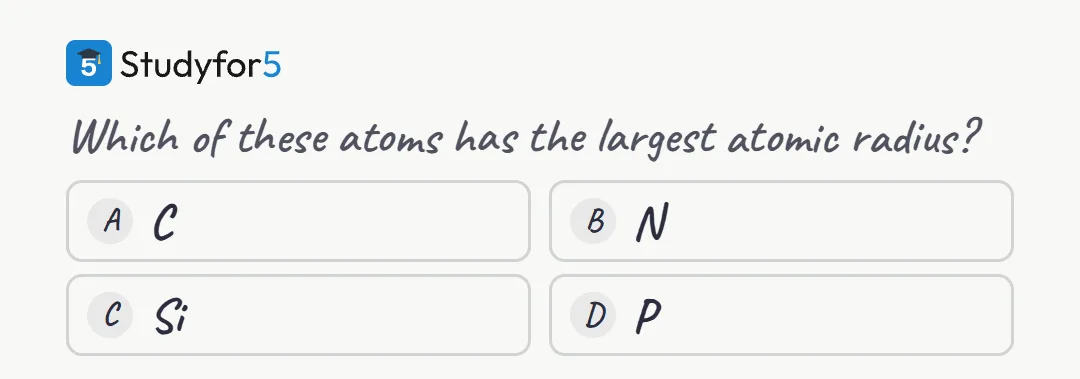
Which of these atoms has the largest atomic radius?
- A)
- B)
- C)
- D)
Solving this Problem
Atomic radius is the size of an atom, measured from the nucleus out to its outermost electrons. There is nothing to calculate in this problem, so instead of a formula we use the periodic table.
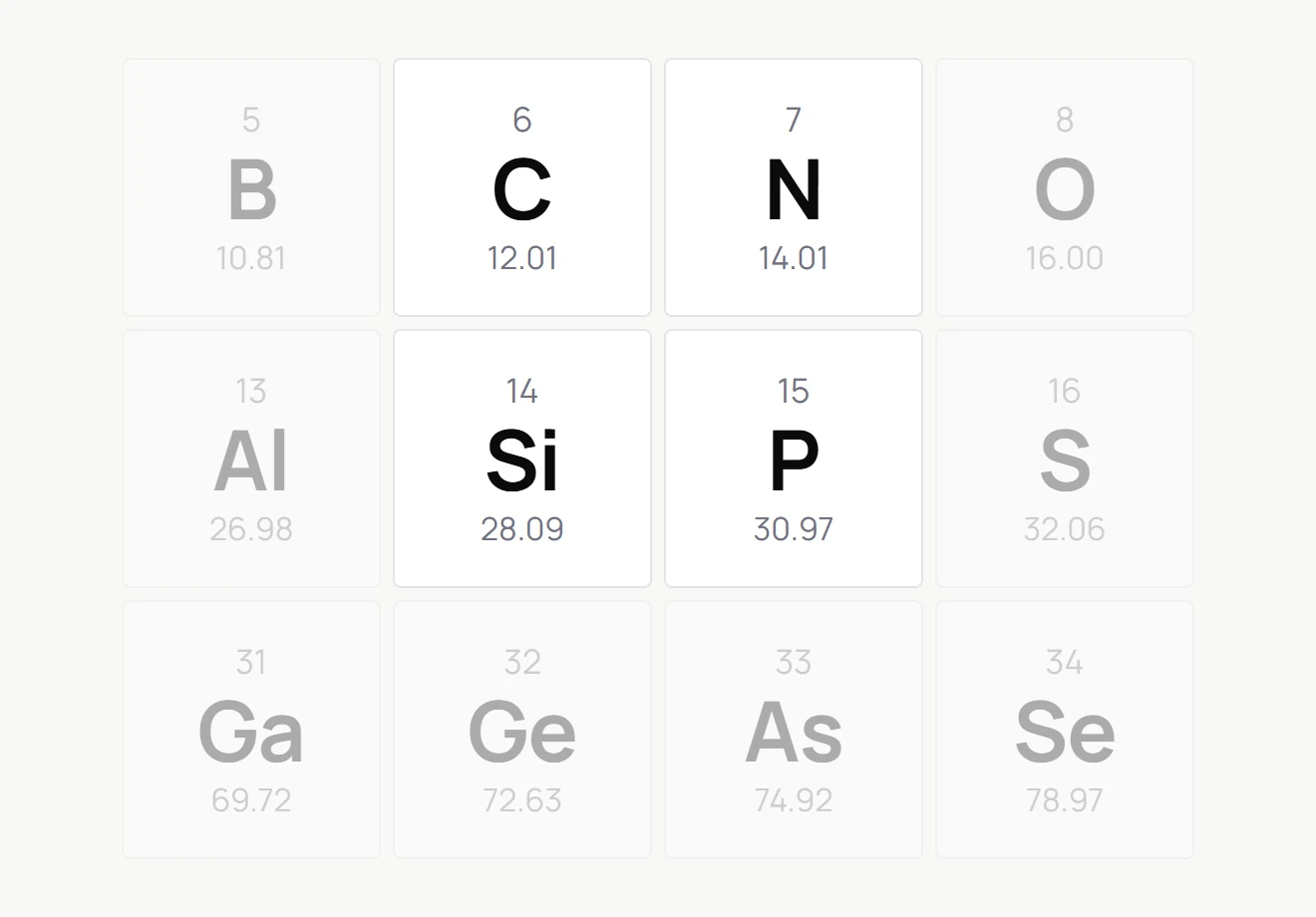
The first thing to do is find all four elements on the table. and sit next to each other in period two, and and sit directly underneath them in period three. That puts our four choices in a two by two block, which lets us easily compare them. If you need a refresher on periodic trends, practice the unit 1.7 Check Your Understanding Quiz in your AP Chemistry course.
Step 1
Going down the periodic table, atomic radius gets bigger. Every row we move down adds another shell of electrons, and the electrons in that new shell sit further from the nucleus than the ones before them. So is bigger than , and is bigger than .
That tells us the answer is in the bottom row of our four choices, but it does not finish the problem, because we are still left with two elements to choose between.
Step 2
Going left across the periodic table, atomic radius also gets bigger. As we move left there are fewer protons in the nucleus pulling on that same outer shell, so the electrons are held less tightly and sit further out. That means is bigger than , and is bigger than .
Atomic radius increases when you move left and down on the periodic table. Therefore, has the largest atomic radius because it has more electron shells than and , and its nucleus has a weaker pull on the outermost electrons than does. The correct answer is choice C!
Watch the full solution
Studyfor5 has full AP Chemistry practice exams, FRQs graded in seconds with a rubric breakdown, and a predicted AP score so you always know where you stand.